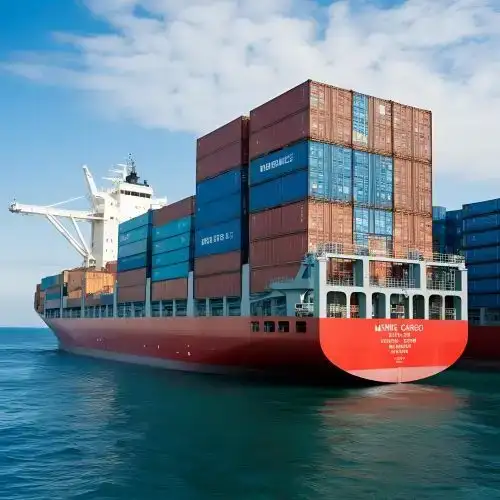
Marine Cargo Insurance in Kenya: What the New Mandatory Local Cover Rules Mean For Your Imports
If You Import Anything Into Kenya, the Rules Just Changed
On 1 July 2026, Kenya's Insurance Regulatory Authority (IRA) began enforcing something that has been on the books since 2017 but was never fully implemented: every importer must now buy marine cargo insurance from a locally licensed Kenyan insurer before their goods can clear customs.
Not from the supplier's insurer in China. Not from a foreign underwriter bundled into a CIF (Cost, Insurance, Freight) contract. From a licensed Kenyan insurer, verified digitally, before Kenya Revenue Authority (KRA) will release your container.
If you import stock, equipment, raw materials, or vehicles, even occasionally, this affects you. Here is exactly what changed, why it happened, what it costs, and what you need to do differently starting now.
THE SHORT VERSION
- Effective 1 July 2026, all imports into Kenya require a digital Marine Cargo Insurance Certificate from a locally licensed insurer before customs clearance.
- Foreign insurers can no longer legally underwrite cargo bound for Kenya under a CIF contract.
- The certificate is verified through a platform linking your insurer, IRA, eCitizen, and KRA's customs system (ICMS).
- This follows a 2025 attempt that stalled due to technical issues — the system has now been rebuilt with Safaricom's involvement and is live.
What Marine Cargo Insurance Actually Covers
Marine cargo insurance protects the value of goods while they are in transit- by sea, air, or land - against loss or damage. Despite the name, it is not limited to ocean freight; it typically covers the full journey from the supplier's warehouse to your premises in Kenya, including the port handling and inland transport legs.
A standard policy generally covers:
- Total loss of the vessel or cargo - sinking, grounding, or collision at sea
- Fire and explosion during transit or storage
- Theft, pilferage, and non-delivery of whole packages
- Damage from rough handling, dropping, or crushing during loading and offloading
- General average contributions, your share of costs when cargo is sacrificed to save a vessel
- Water damage from heavy weather, flooding of the hold, or container leakage
Most Kenyan insurers offer cover under the Institute Cargo Clauses framework, typically Clause A (all-risk, the broadest), Clause B (named perils, mid-tier), or Clause C (major casualties only, the narrowest). The clause you choose materially changes what is and is not paid out, this is worth a direct conversation with your insurer rather than a default selection.
What It Typically Does Not Cover
- Inherent vice - goods that spoil or degrade due to their own nature (e.g. fruit ripening in transit)
- Poor or inadequate packing by the shipper
- Ordinary wear, leakage, or loss of weight in the normal course of transit
- Delay-related losses, unless a specific delay extension is purchased
- War, strikes, riots, and civil commotion, unless added as a separate extension
If your cargo passes through higher-risk routes or ports, ask specifically about War Risk and Strikes, Riots & Civil Commotion (SRCC) extensions, these are add-ons, not automatic inclusions.
Why the Rules Changed: The Legal Background
This requirement is not new law, it has existed since the Finance Act of 2017, which amended the Marine Insurance Act to add Section 16A. That section requires anyone with an insurable interest in marine cargo destined for Kenya to place that cover with an insurer licensed under Kenya's Insurance Act, not a foreign underwriter.
For years, enforcement was weak. Many importers continued buying insurance abroad, bundled into their supplier's CIF pricing, because Kenya had no reliable way to check compliance at the point of customs clearance.
That changed through two attempts:
- February 2025 - IRA and KRA jointly announced enforcement of local marine cover, but the initiative was undermined by technical system failures. Marine and transit insurance premiums grew just 2.9% that year, to roughly Ksh 4.8 billion - the slowest pace in four years, reflecting how much business was still flowing to offshore insurers.
- 2026 rebuild - the National Treasury directed IRA to work with KRA and Safaricom to build a proper digital platform. That platform now links licensed insurers, IRA, eCitizen, and KRA's Integrated Customs Management System (ICMS) directly, closing the loophole that let uninsured or foreign-insured cargo slip through.
The declared policy goal is to keep marine insurance premiums, and the jobs, underwriting expertise, and reinsurance activity that come with them inside the Kenyan economy, rather than flowing to insurers abroad.
What This Means If You Import Goods
- Your CIF contracts need a second look. If your supplier's quoted price included insurance under old CIF terms, that insurance component may no longer be valid for Kenyan customs purposes. Many importers are renegotiating toward FOB (Free on Board) or CFR (Cost and Freight) terms and arranging cover locally instead.
- You need a Digital Marine Cargo Insurance Certificate before your goods reach port. This is requested through your local insurer's portal, or through connected platforms such as eCitizen, and is transmitted automatically to KRA's ICMS.
- Clearance can stall without it. Cargo without a valid local certificate risks being held at the port, which means demurrage charges accumulating daily while the paperwork catches up.
- Cargo already at sea under old foreign policies has raised genuine transitional questions. Industry bodies have specifically asked the Commissioner of Insurance to clarify how goods already shipped before the deadline, under pre-existing foreign cover, should be treated at clearance. If you have cargo in transit right now under a foreign policy, confirm your position with your clearing agent and a local insurer before it arrives.
A NOTE ON TIMING
Enforcement dates for marine insurance rules in Kenya have shifted before, the February 2025 attempt did not hold due to system issues. If you import regularly, don't assume today's rules are static.
Build a habit of confirming current requirements with your clearing agent or insurer before each shipment, rather than working from what applied last time.
How Much Does Marine Cargo Insurance Cost?
Premiums are calculated as a percentage of your insured cargo value, not a flat fee.
The standard approach:
- Start with your CIF value, cost of goods, freight, and insurance combined.
- Add a markup, conventionally 10%, to account for potential value appreciation or incidental costs during transit, giving an insured value of 110% of CIF.
- Apply the insurer's rate, which depends on cargo type, route, packaging quality, and claims history.
General cargo typically falls in a band of roughly 0.1% to 0.5% of insured value for well-packaged, lower-risk goods on standard routes. Fragile, high-value, or hazardous cargo, electronics, glassware, chemicals, dangerous goods can attract materially higher rates, sometimes 1% or more.
WORKED EXAMPLE
A trader imports electronics with a CIF value of Ksh 3,000,000.
Insured value at 110% of CIF: Ksh 3,300,000.
At an illustrative rate of 0.3% for general electronics on a standard route: premium ≈ Ksh 9,900.
That is a modest cost relative to the risk of an uninsured Ksh 3 million shipment being damaged, delayed at customs, or lost at sea.
Common Mistakes Kenyan Importers Are Making Right Now
- Assuming the supplier's CIF quote still covers them, under the new rules, insurance placed abroad does not satisfy the local requirement, even if you paid for it.
- Insuring at the original purchase price instead of full replacement value, which leaves a shortfall if a claim is ever needed.
- Not declaring the true nature of goods, dangerous goods, perishables, and high-value electronics require accurate disclosure; misdeclaration is one of the most common reasons claims are later rejected.
- Leaving the certificate to the last minute, and discovering at the port that clearance is delayed while the paperwork is sorted out, with demurrage charges accumulating in the meantime.
- Treating this as a one-off compliance task rather than reviewing cover on every shipment, especially as routes, cargo types, and values change.
Who This Affects
- Retailers and traders importing stock, electronics, clothing, hardware, furniture
- Manufacturers importing raw materials, machinery, or spare parts
- Motor dealers and individuals importing vehicles
- Hospitality and hotel businesses importing equipment and fittings
- Clearing and forwarding agents managing imports on behalf of clients
If your business has an import line item anywhere in its supply chain, this now needs a place in your compliance checklist, alongside your usual customs and tax obligations.
How to Get Compliant
- Talk to a locally licensed insurer (we do this on your behalf) before, your next shipment leaves the supplier's warehouse, not after it arrives at the port.
- Provide accurate shipment details: CIF value, cargo description, route, and packaging, accuracy here protects you at claim time as much as it does at underwriting.
- Request the Digital Marine Cargo Insurance Certificate through the insurer's portal or eCitizen; this is transmitted automatically into KRA's ICMS.
- Revisit your supplier contracts, if you are still quoted on CIF terms, confirm in writing whether the insurance component is being adjusted now that it must be placed locally.
- Keep your clearing agent informed early, so the certificate is in the system well before your container reaches the port.
Get Your Import Cover Sorted Before Your Next Shipment
Whether you are shipping your first container or your fiftieth, the safest move right now is a quick review with a locally licensed insurer, before your goods are on the water, not after they are stuck at the port.
DM us the word CARGO and we will walk you through what local marine cargo cover costs for your specific goods and route, and help you get your digital certificate sorted with no jargon and no pressure.
Comments (0)
No comments yet. Be the first to comment!
Leave a Comment